
How Uppsala University Is Using Dorna Robots to Automate Bioscience Research
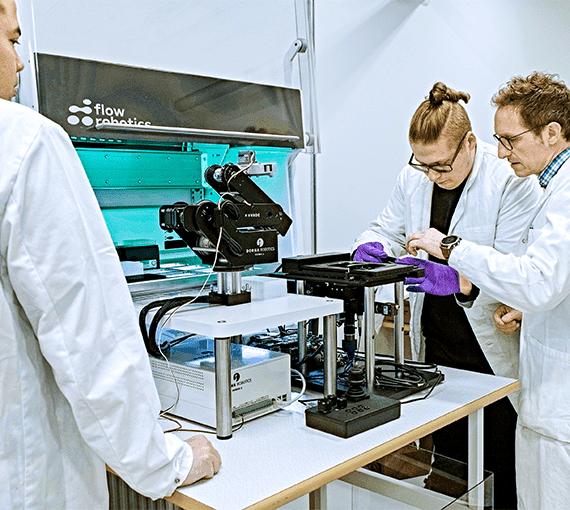
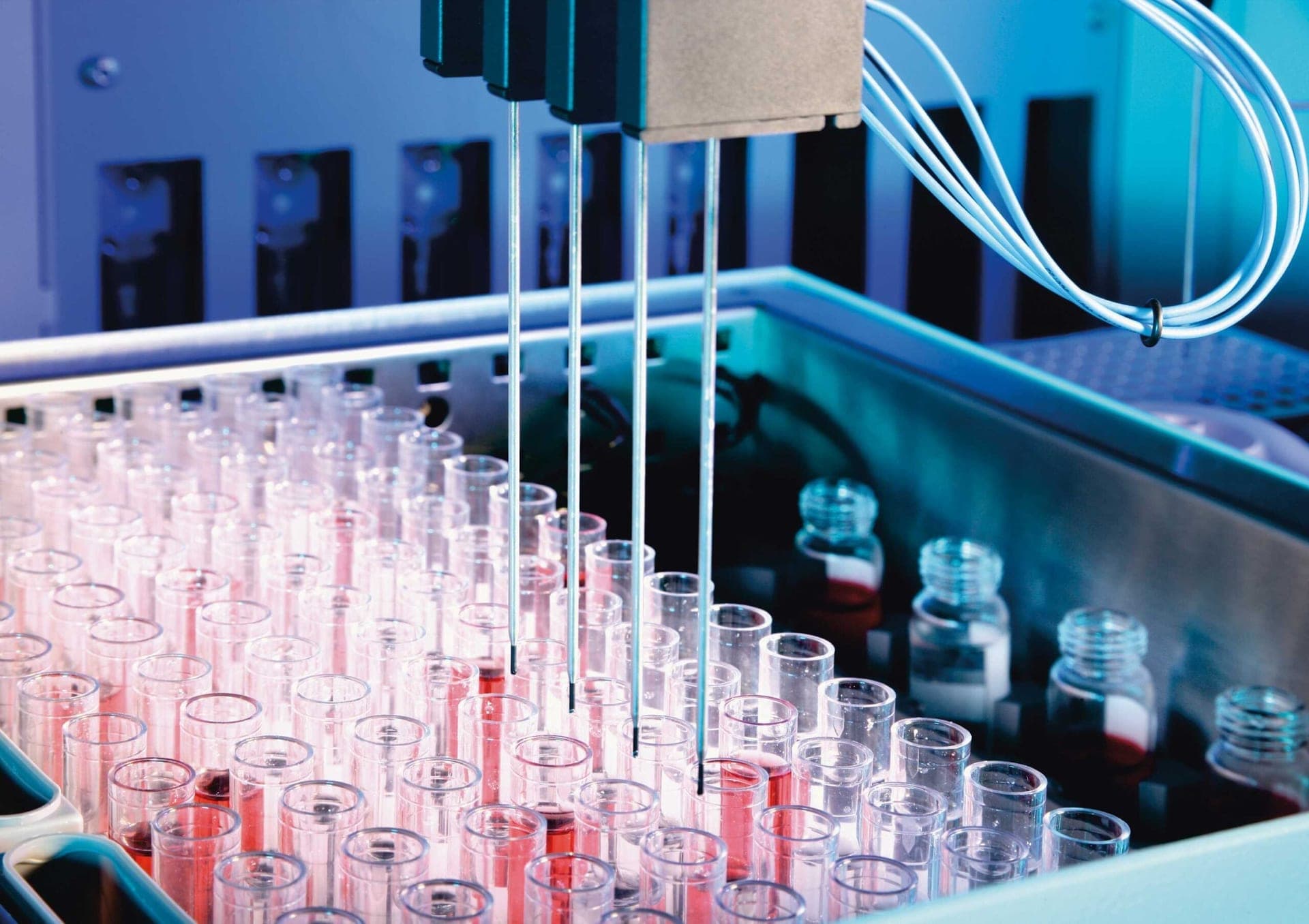
Robots in university labs aren't new — but the way they're being used is changing. At Uppsala University's Department of Pharmaceutical Biosciences, Professor Jordi Carreras-Puigvert's team has integrated Dorna robots into active research workflows: sorting and counting cells, isolating compounds, transferring samples between liquid handling devices and electron microscopes, and preparing samples for analysis.
What makes this partnership noteworthy isn't just the research output. It's that students are learning to program and operate lab automation as part of their education — building skills that are increasingly essential in modern bioscience.
The Challenge
University research labs face a specific set of constraints. Budgets are limited. Workflows change frequently as research evolves. Equipment needs to be flexible enough for students with varying levels of technical experience to operate. And any automation solution has to work with the instruments already in the lab — not replace them.
Professor Carreras-Puigvert's lab needed a robotic system that could handle repetitive sample preparation tasks with precision, integrate with existing liquid handling devices and microscopes, and be programmed by students who had never written a line of robot code.
Why Dorna
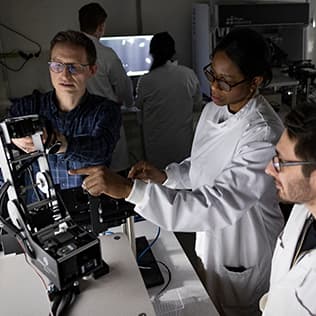
Dorna's web-based programming interface made it possible for students to start teaching the robot within minutes — no prior robotics experience required. For more advanced protocols, full Python API support meant the robots could be integrated into existing scripted workflows and coordinated with other instruments in a unified environment.
The combination of accessible visual programming and deep Python control was the deciding factor. The lab didn't need to choose between ease of use and technical capability — they got both.
What They Built
The team configured Dorna robots for several core workflows:
- Cell sorting and counting — automated sample preparation for downstream analysis
- Compound isolation — precise handling of sensitive biological materials
- Sample transfer — moving samples between liquid handling systems and electron microscopes
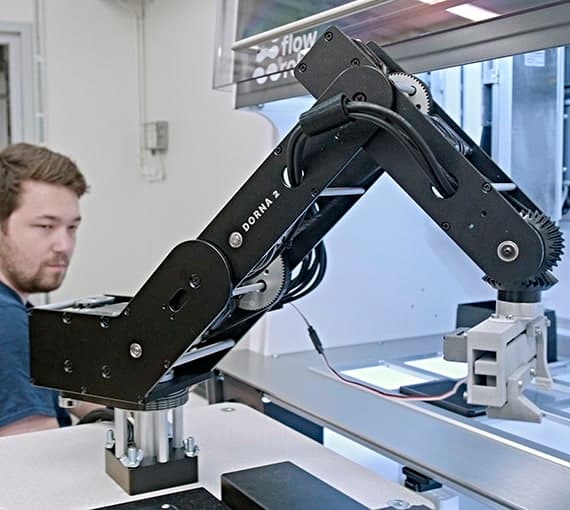
- Instrument coordination — using programmable I/O ports to control third-party equipment, including 3D-printed custom grippers
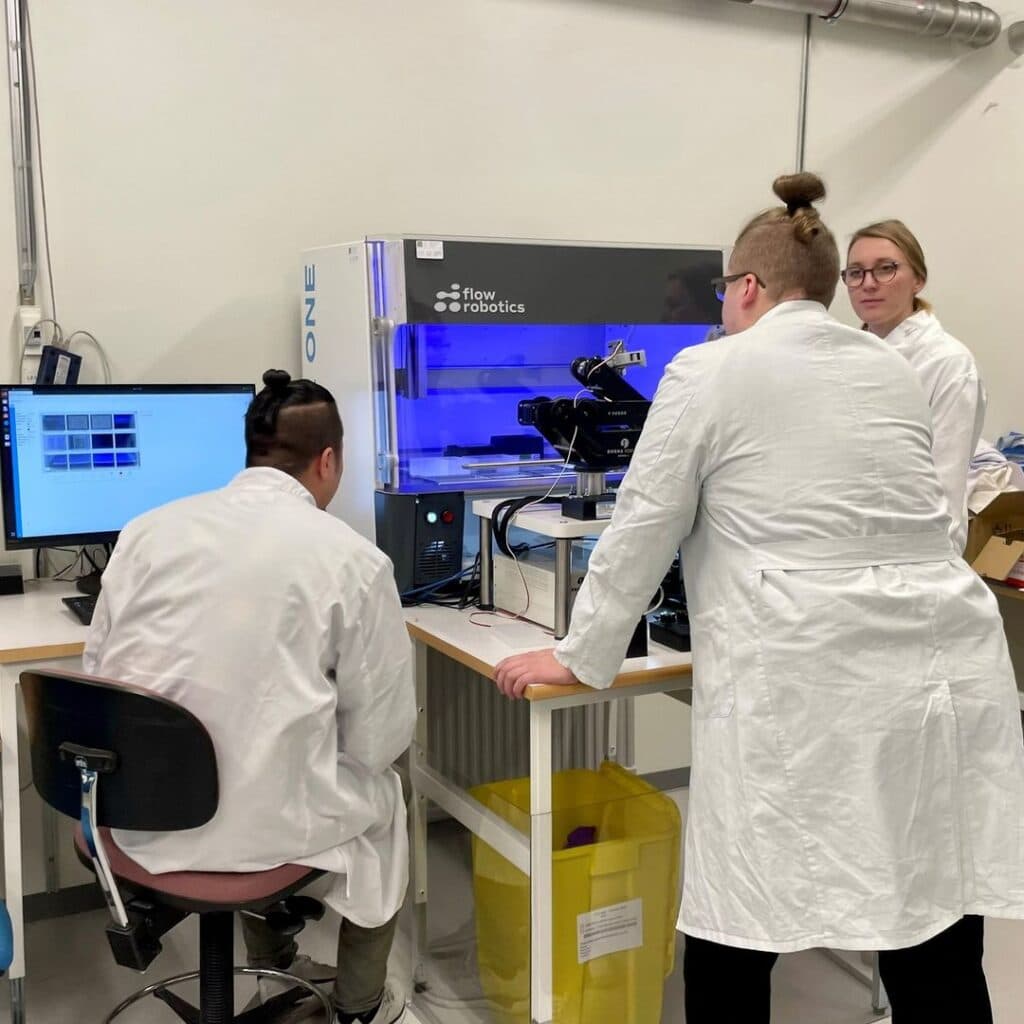
Students gained hands-on experience integrating robotic automation into real research procedures — not simulations or toy problems, but live experiments producing real data.
From the Lab
“It's easy to say that I am very impressed with the level of polish and flexibility of the Dorna 2 arm. The web-based control software enables rapid testing, while Python APIs support advanced protocols. User-programmable I/O ports control instruments, simplifying coordination with specialized equipment.”
— Rikard Nyström, Uppsala University
The Bigger Picture
University robotics programs don't just produce research — they produce people. Students trained on real lab automation platforms graduate with practical skills in robotic programming, system integration, and workflow design. These are the engineers and scientists who will lead the next wave of laboratory automation in pharma, biotech, and clinical diagnostics.
Dorna has worked with dozens of university labs to implement cost-effective, flexible robotic solutions that serve both research and education. Uppsala is one of the strongest examples of what that looks like in practice.
If your lab or university program is exploring automation, we'd love to hear what you're working on.